Getting traffic to your dental website is one thing. Turning those visitors into booked appointments is something else entirely.
Most dental practices in the UK are sitting on a quiet disaster. A website that looks decent enough but losses potential patients every single day. Someone searches “dentist near me” lands on your homepage, spends 12 seconds scrolling through stock photos of perfect teeth, and books with the practice down the road instead. Not because their site was flashier. Because it felt more trustworthy, easier to navigate, and clearer about what the next step was.
That gap between someone visiting your website and someone becoming your patient is exactly what this guide is about.
The Real Job of a Dental Website
Here’s something worth sitting with: your website is not a brochure. It is a receptionist, a sales consultant, and a trust-builder all rolled into one. It’s working around the clock, answering questions from people who are often anxious about visiting a dentist in the first place.
Dental anxiety is real. The NHS estimates that around 25% of UK adults feel some level of fear around dental visits. That means a significant chunk of your website visitors are already on edge before they have even picked up the phone. Your website either soothes that anxiety or amplifies it. There is rarely a middle ground.
With that in mind, let’s look at what actually makes a dental website convert.
First Impressions: Speed, Design, and Mobile
You have roughly three seconds before someone decides whether to stay or leave. On mobile, that window is even tighter and since the majority of local searches in the UK now happen on smartphones, your mobile experience isn’t an afterthought, it’s the main event.
A slow-loading website is one of the most common silent killers of dental enquiries. Pages that take longer than three seconds to load see dramatic drops in engagement. If your site was built more than four years ago and has not been touched since, there is a fair chance it’s already losing patients before a single word has been read.
Design matters too but not in the way most people think. Patients are not looking for something that wins design awards. They are looking for something that feels professional, calm, and easy to use. Clean layouts, readable fonts, genuine photography of your practice and team. These things signal competence far more than a flashy animated header ever could.
One practical rule: if a new patient can’t find your phone number or a booking link within five seconds of landing on any page, something needs to change.
Trust Signals That UK Patients Actually Look For
This is where dental websites often fall short, especially when trying to attract private patients who are weighing up a significant financial decision.
In the UK, patients are used to the NHS as a baseline. When they are considering private treatment, whether that’s Invisalign, implants, or composite bonding – they’re making a choice that often costs hundreds or thousands of pounds. That calls for a different level of trust.
The signals that build that trust are more specific than you might expect:
- GDC registration numbers:
Every registered dentist in the UK is listed on the General Dental Council’s public register. Displaying your registration number is not just good practice, it is a quiet signal to patients that you are accountable and regulated. - CQC inspection ratings:
If your practice has been inspected by the Care Quality Commission and received a good or outstanding rating, that belongs on your homepage. Patients recognise the CQC badge which carries weight. - Real patient reviews, presented well:
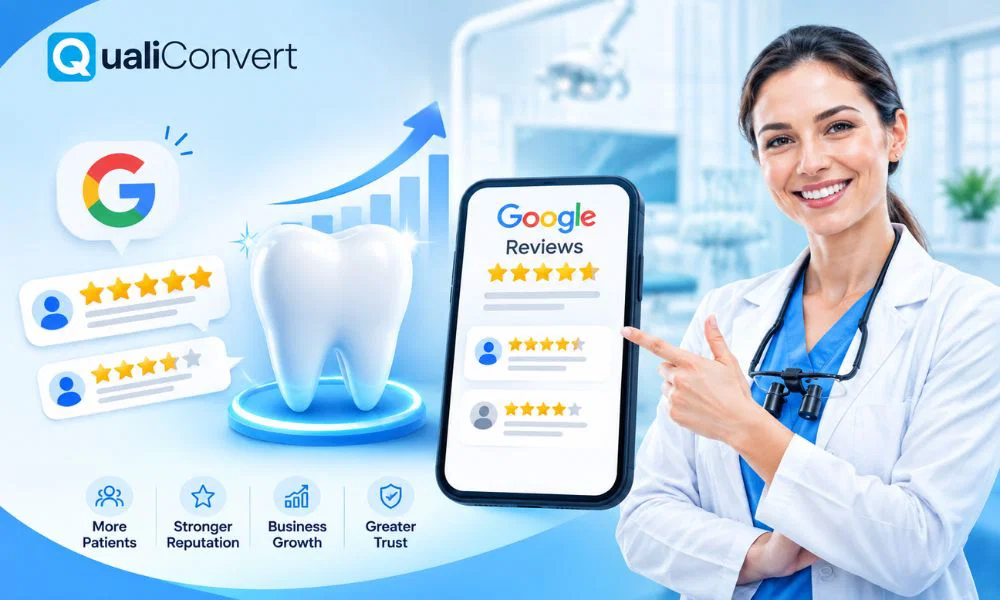
Not a carousel of five-star quotes with no context. Actual named reviews from Google or Trustpilot, ideally with a response from the practice. Practices with more than 50 recent reviews consistently outperform those with sparse feedback, not just in rankings but in actual conversion rates. - Genuine team photography:
Stock photos of models in white coats do more harm than good. Patients want to see who they’ll actually be handing their mouth over to. A well-shot team photo, even one taken on a decent smartphone in good lighting beats a generic library image every time.
Copy That Patients Can Actually Relate To
The language on most dental websites reads like it was written for other dentists, not for patients. Words like “comprehensive restorative solutions” and “advanced periodontal therapy” mean nothing to someone who just wants to know if you can fix their chipped front tooth before their sister’s wedding.
Write for the person searching, not the professional reading. That means answering the questions your front desk gets asked every week:
- “Do you see nervous patients?”
- “Are you taking on new NHS patients?”
- “How much does Invisalign cost roughly?”
- “Can I get an emergency appointment?”
These questions addressed plainly, without corporate filler, do more for conversions than any amount of technical SEO jargon. The best dental website copy is honest, warm, and specific. It sounds like a knowledgeable human being, not a brochure.
NHS vs Private: Two Different Conversations
If your practice offers both NHS and private treatments, as many UK practices do – your website needs to speak to both audiences without muddling the message.
An NHS patient searching for a new dentist is primarily asking: Are you taking on new patients? What’s the charge band for what I need?
A private patient is asking: Is this practice worth the money? Can I trust the results? What’s the experience like?
These are fundamentally different motivations. A dedicated NHS information page clearly explaining how to register, what’s included, and current availability which serves one group. A private treatments section with detailed treatment guides, finance options, and before/after case studies serves the other. Trying to address both in the same undifferentiated homepage copy usually satisfies neither.
Conversion Points: Making It Easy to Say Yes
Every dental website needs clear, low-friction ways for a visitor to take the next step. The mistake most practices make is relying solely on a phone number.
Some people especially younger patients don’t want to call. They would rather fill in a quick form, send a WhatsApp message, or book directly into an available slot online. If you are not offering at least two or three ways to get in touch, you are losing a slice of potential patients every day.
Online booking that integrates directly with your practice management system is worth every penny of the setup cost. The fewer steps between “I want an appointment” and “I have an appointment,” the better. And do not overlook WhatsApp for private enquiries especially, it’s becoming a preferred first point of contact for many patients.
Calls to action should be visible throughout the page not just at the bottom. A sticky header with a phone number and “Book Online” button means a visitor never has to scroll back up to find out how to contact you.
Local SEO: Being Found Before Being Chosen
A perfectly designed website is useless if no one can find it. For most dental practices, local search is everything patients are not travelling across cities for routine care.
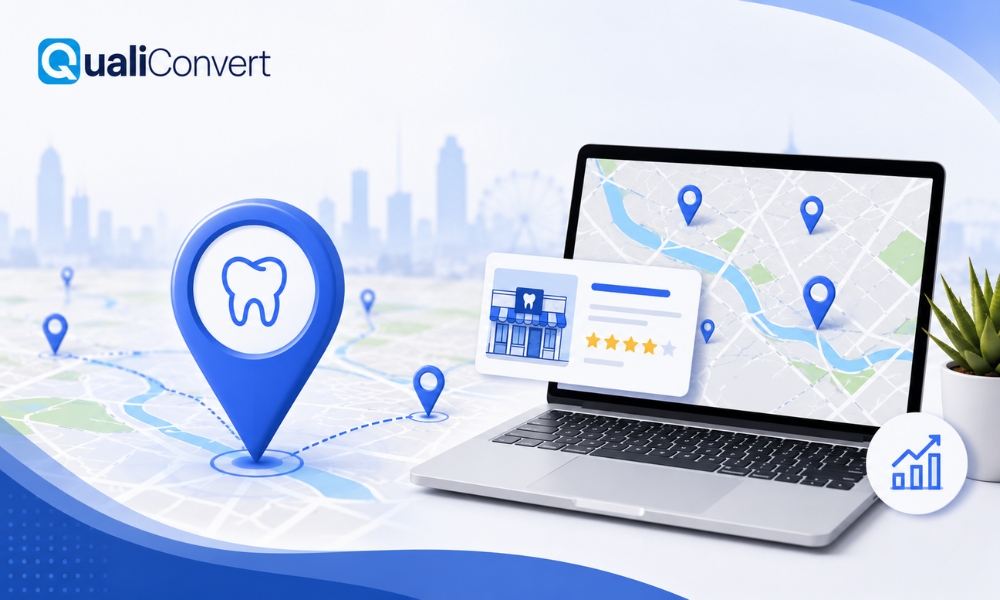
Your Google Business Profile is arguably as important as your website itself. It needs to be fully completed, regularly updated with photos, and actively monitored for new reviews. Practices that appear in Google’s local map pack, the three results that show up with a map above the organic listings, receive the overwhelming majority of clicks for local search terms.
On your website, this means having location-specific pages if you serve multiple areas, embedding your Google map, and making sure your name, address, and phone number appear consistently across every online directory where your practice is listed.
EEAT: Why Google (and Patients) Reward Authority
Google’s guidance around EEAT is especially significant for dental and healthcare websites, which fall into what Google classifies as “Your Money or Your Life” content.
In practice, this means your website content should be written or reviewed by qualified dental professionals, it should cite reputable sources where relevant, and it should clearly display the credentials of everyone contributing to it. Blog posts and treatment guides written by a named dentist, with their GDC number included, carry far more weight both with search engines and with actual patients, than anonymous agency-written copy.
This also applies to how AI search tools surface dental information. Platforms like Google’s AI Overviews and Bing Copilot are pulling from sources that demonstrate genuine expertise. Practices that invest in authoritative, experience-led content are increasingly the ones showing up in these results.
The Bottom Line
A dental website that converts is not necessarily the most expensive one or the most technically sophisticated. It is the one that earns trust quickly, removes friction from the booking process, speaks plainly to the people it’s trying to reach and proves, through every element on the page, that it’s a practice worth choosing.
Most of what separates a high-converting dental website from an average one isn’t complicated. It’s just consistently done.
At QualiConvert, we help UK dental practices turn their websites into genuine patient-acquisition tools not just digital business cards. If you’d like a no-obligation review of your current website’s performance, get in touch with our team today.