
Google Ads for Dentists
Paid search campaigns built around the treatments you want to fill and the patients who are ready to book.
When a patient types “dental implants near me” or “emergency dentist open today” into Google, they are not browsing. They have already decided they need treatment. They are looking for a practice to book with, and they are going to choose from the top results on that page.
Google Ads puts your practice at the top of those results. Not in three months. From the day your campaign goes live.
That is the core reason dental practices use paid search. It creates immediate visibility for the exact searches that turn into appointments, without waiting for organic rankings to build.
Let's take an honest look at where you stand.
What Google Ads Is and How It Works for Dental Practices
If you have never run paid search before, here is a straightforward explanation.
Google Ads is an advertising platform that lets businesses pay to appear at the top of Google search results for specific search terms. You choose which searches you want to appear for, set a budget, and pay only when someone clicks your ad. If nobody clicks, you pay nothing.
The position your ad gets is determined by a combination of how much you bid per click and how relevant your ad is to the search. A well-structured campaign from a smaller practice can appear above a larger competitor if the targeting and ad quality are stronger. It is not simply about spending the most money.
For a dental practice, the process looks like this in practice:
A patient in your area searches “private dentist Manchester” or “Invisalign consultation Birmingham.” Your ad appears at the top of the results page with your practice name, a short description, and a link. If they click, you pay for that click. You can also add your phone number directly to the ad, so patients can call you without even visiting your website. The key point that separates Google Ads from any other form of advertising is intent. The person seeing your ad has already told Google exactly what they are looking for. You are not interrupting someone while they scroll through social media. You are appearing precisely when they are actively searching for the service you offer.
Why Google Ads Works Well for Dental Practices Specifically
Not every business gets strong results from paid search. Dental practices are one of the categories where it works particularly well, for a few specific reasons.
Treatment searches carry clear intent. Someone who types “composite bonding London cost” is not in the early stages of thinking about dental work. They are actively comparing options and close to making a decision. That search tells you the treatment they want, roughly where they are, and that they are thinking seriously about moving forward. That is a warm enquiry, not a cold lead.
You control the budget completely. You set a daily or monthly spend cap and cannot go over it. If a campaign performs well, you increase the budget. If something is not working, you pause it the same day. There are no minimum commitments on the ad spend itself.
You can target specific treatments. Rather than running one broad campaign for “dentist,” you can run separate campaigns for implants, Invisalign, teeth whitening, and emergency dentistry. Each treatment has its own ads and its own landing page, so the patient sees something directly relevant to the search they just made.
Results are immediate and trackable. A Google Ads campaign can start generating enquiries within days of going live. Every click, phone call, and form submission is tracked, so you know exactly what your budget is producing.
Which Dental Treatments Get the Best Results from Google Ads
Not every treatment produces the same return from paid search. Based on running Google Ads campaigns for UK dental practices, these are the treatment categories that consistently perform well.
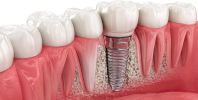
Dental Implants
Implant searches generate some of the highest-value enquiries in dentistry. Patients researching implants are typically serious about treatment and willing to travel further for the right practice. Cost per click is higher than average for implant keywords, but a single conversion can justify significant ad spend.

Invisalign and Clear Aligners
Orthodontic searches are high volume and high intent. Adult patients comparing clear aligner options are actively weighing up practices and pricing. Well-targeted campaigns for this category reliably produce consultation bookings.

Emergency Dentistry
Searches like "emergency dentist near me" and "tooth pain today" carry the strongest immediate intent of any dental search. A patient in pain needs an appointment today. Ads for emergency slots convert at very high rates when the landing page is set up to make booking fast and simple.

Cosmetic Treatments
Composite bonding, veneers, whitening, and smile makeovers attract patients who are in a more considered decision process. These campaigns often benefit from clear before-and-after imagery and specific pricing information on the landing page.

Private Patient Acquisition
Practices looking to grow their private patient list alongside or instead of NHS work can use Google Ads to target private-specific searches and reach patients who are actively looking for an alternative to NHS waiting times.
Google Ads versus SEO: An Honest Comparison
Practices often ask whether to invest in Google Ads, SEO, or both. The answer depends on where your practice is right now, and we would rather give you a direct answer than a vague one.
Google Ads produces results quickly. A campaign can go live within a week and start generating enquiries shortly after. The trade-off is that it requires ongoing spend. The moment you stop paying, the visibility stops. There is no lasting benefit built up from previous campaigns.
SEO builds more slowly but creates something more durable. A practice that ranks well organically continues to receive traffic without paying for each click. The cost per new patient from SEO typically falls significantly as the campaign matures, because you are building an asset rather than renting a position.
For most practices, both channels work together. Google Ads provides immediate patient flow while SEO builds the long-term organic foundation. As organic rankings improve and generate more enquiries on their own, the reliance on paid ads can reduce and the overall cost of patient acquisition improves.
For a newly launched practice that needs patients now, Google Ads is usually the first priority. For an established practice that wants to reduce dependence on paid search over time, SEO is the longer play. We are happy to be direct with you about which combination makes sense for your situation.
How Much Does Google Ads Cost for a Dental Practice?
This deserves a straight answer. The cost breaks down into two things: how much you pay per click, and how many clicks it takes to produce one patient enquiry.
Typical cost per click ranges for dental searches in the UK:
| Treatment | Approx. Cost Per Click |
|---|---|
| General dentist / check-up | £1.50 to £4.00 |
| Teeth whitening | £2.00 to £6.00 |
| Composite bonding | £3.00 to £8.00 |
| Invisalign / clear aligners | £4.00 to £12.00 |
| Emergency dentist | £3.00 to £9.00 |
| Dental implants | £8.00 to £25.00 |
These are approximate ranges. Actual costs vary by location, competition, campaign quality, and time of year. London and other major cities typically sit at the higher end.
Typical monthly ad spend for dental practices:
A starting budget for a single-location practice targeting two or three treatment types in a mid-competition market is usually between £600 and £1,500 per month in ad spend. Campaigns targeting high-value treatments in competitive cities often need £2,000 or more to generate meaningful volume.
Your ad spend goes directly to Google. Our management fee is charged separately. We will give you a specific budget recommendation based on your location, treatments, and competition level before you commit to anything.
Real Campaign Results: What Proper Targeting Actually Does
The same budget. 455% more patient enquiries.
A UK dental practice came to us spending £1,114 per month on Google Ads with a 1.25% conversion rate. Every patient enquiry was costing £247.
We restructured the campaign around high-intent treatment searches, cut wasteful keywords, and matched each ad to a dedicated landing page.
The following month, spend dropped to £919 and the conversion rate jumped to 11%.
| Before | After | |
|---|---|---|
| Monthly Ad spend | £1,114 | £919 |
| Patient enquiries | 4.5 | 25 |
| Cost per enquiry | £247.65 | £36.76 |
| Conversion rate | 1.25% | 11.06% |
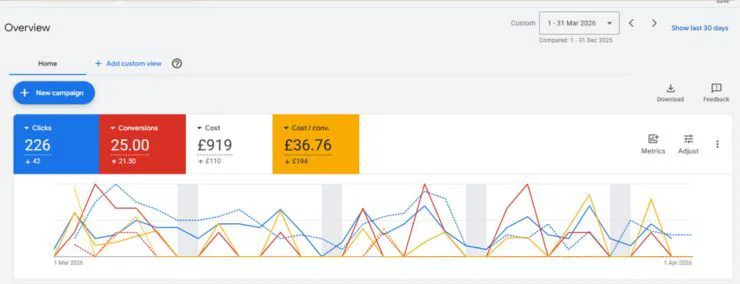
Same market. Smaller budget. 455% more patient enquiries.
What Our Google Ads Service Includes
Keyword research and campaign structure
We identify the specific searches your target patients are making and build campaigns organised by treatment type and location. We also build a thorough negative keyword list from the start, which stops your budget being spent on searches that will never convert.
Ad copy written for dental patients
Generic ad copy does not convert well. We write ads that speak directly to the patient's situation, whether that is someone in pain looking for same-day care or someone comparing implant prices across multiple practices. Ad copy that matches the intent of the search produces better click-through rates and lower costs per enquiry.
Landing page review and recommendations
Sending paid traffic to your general homepage wastes budget. A patient who clicks a dental implants ad should land on a page specifically about implants, with clear pricing, case photos, and a straightforward way to book. We review your landing pages and provide specific recommendations, or work with your web team to build pages that convert.
Conversion tracking setup
We set up tracking for phone calls, form submissions, and appointment bookings generated by your campaigns. You always know exactly how many patients your ads produced and what each one cost.
Ongoing campaign management
Google Ads is not a set-and-forget activity. We monitor performance weekly, adjust bids, test ad variations, and refine targeting based on what the data shows. Actively managed campaigns consistently outperform those left to run unattended.
Monthly reporting
Each month you receive a report covering spend, clicks, enquiries, cost per patient acquisition, and any changes made to the campaigns. We explain the numbers in plain terms and flag anything that needs a decision from you.
Who We Work With
We run Google Ads campaigns for UK dental practices that want a measurable return from their paid search budget. This includes:
- General practices building their private patient listCosmetic and aesthetic clinics targeting high-value treatment enquiries
- Implant practices where a single case justifies significant ad spend
- Orthodontic practices running Invisalign and aligner campaigns
- New practices that need patient volume quickly while their organic presence builds
- Multi-location groups that need campaigns managed consistently across multiple sites
We do not take on practices where we do not think Google Ads is the right fit. If paid search is not the right channel for your practice right now, we will tell you and explain why.
Let's Talk About What Your Practice Can Do?
Before spending anything on paid search, it is worth understanding what is realistic for your location, your competition, and the treatments you want to promote.
We offer a free strategy call where we look at your local market, what your competitors are bidding on, and what a realistic cost per patient enquiry looks like for your practice. You come away with a clear picture of whether Google Ads makes sense for you right now, and what it would take to make it work.
Frequently Asked Questions About Google Ads for Dentists
Once your campaign is set up and approved by Google, ads can go live within a few days. Most practices start seeing enquiries within the first week. Volume and lead quality usually improve over the first four to six weeks as we gather performance data and refine the targeting.
Your ads stop showing immediately. There is no lasting benefit once the spend stops, which is one of the key differences between paid search and SEO. This is also why we often recommend running both: ads provide immediate volume while SEO builds a foundation that keeps working even if you pause your ad spend.
Only if you want them to. We set campaigns to target patients within a specific radius of your practice or within defined towns and postcodes. For most single-location practices there is no value in showing ads to people who are too far away to realistically visit.
It depends on what you want to achieve. An NHS practice looking to grow private revenue alongside its NHS list can use Google Ads effectively to target private treatment searches. If you are exclusively NHS and looking to grow your patient list, Google Ads is less relevant since NHS patients typically find practices through the NHS website rather than paid search.
Yes, and this is one of the main advantages of paid search for dental practices. We build separate campaigns for each treatment type so your implant ad is seen by patients searching for implants, not patients looking for a general check-up. Each campaign has its own keywords, ads, and landing page.
Our goal is to strengthen your dental practice's online visibility and patient inquiries as a long-term partner.