Dental marketing services are not one-size-fits-all. Whether you run a private practice, an NHS surgery, or a mixed model, the way you attract patients needs to match the type of care you offer.
This guide breaks down the key differences between private and NHS dental marketing, what works for each, and how to build a strategy that brings in the right patients for your practice.
Why the Difference Between Private and NHS Marketing Matters
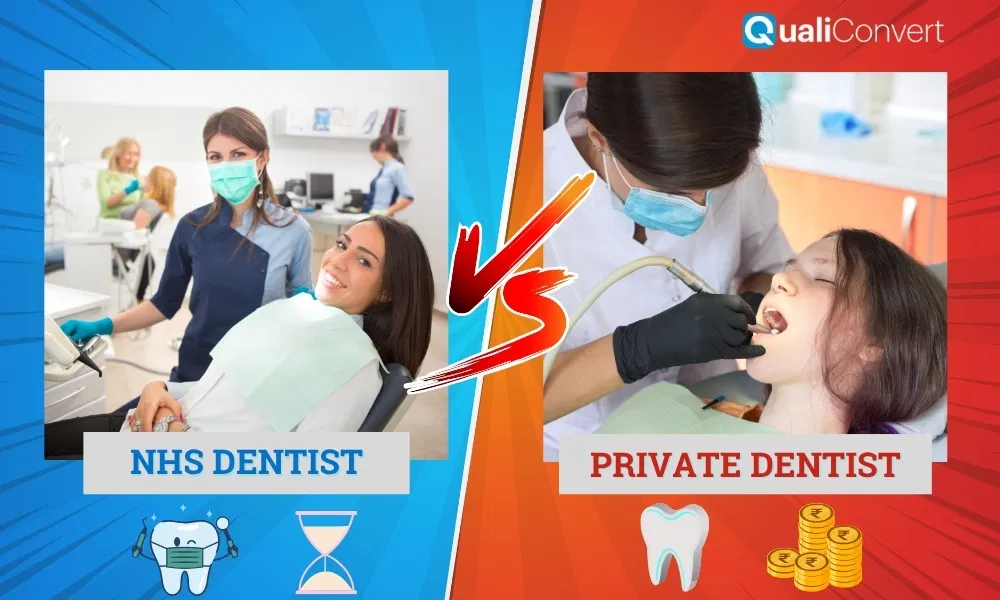
Marketing a private dental practice is very different from marketing an NHS surgery. The patients you are trying to reach have different needs, different motivations, and they search for different things online.
Private patients are often looking for aesthetic improvements, flexible appointments, and a premium experience. NHS patients are usually focused on affordability, availability, and essential dental care.
If you use the same messaging for both, you end up attracting the wrong enquiries, wasting your budget, and frustrating potential patients before they even pick up the phone.
Getting this right is not just good marketing. It is the foundation of a well-run practice.
Need help building a marketing strategy for your dental practice?
At Qualiconvert, we work with private and NHS dental practices to attract the right patients.
The Current State of Dental Marketing in the UK
Before looking at strategies, it helps to understand the market landscape.
Private dentistry now makes up 69% of the total UK dental market by value – the highest proportion ever recorded. NHS dentistry accounts for the remaining 31%, and many practices are moving toward a mixed or fully private model.
At the same time, access to NHS dentistry has become extremely limited. In 2024, up to 97% of new patients attempting to access NHS dental care were unsuccessful. This is creating a sharp divide in patient behaviour and what each type of patient expects from a dental practice.
For private practices, this is an opportunity. Patients are increasingly open to paying for quality care when NHS appointments are unavailable. For NHS practices, it means standing out in a competitive space where patients still value accessibility and trust.
Understanding which side of this landscape you sit on will shape every marketing decision you make.
Who Are You Trying to Attract?
Private Practice Patients
Private patients are typically motivated by more than just dental health. They want:
- Cosmetic improvements such as teeth whitening, veneers, implants, or Invisalign.
- Convenience and flexibility including same-day appointments and extended hours.
- A personalised experience where they feel like a valued individual, not just a number.
- Continuity of care with the same dentist and team over time.
- Modern technology and advanced treatment options.
These patients are often willing to spend more, but they expect more in return. Your marketing needs to reflect the premium nature of what you offer.
NHS Patients
NHS patients have different priorities. They are typically looking for:
- Affordable care with predictable NHS band charges.
- Availability and the ability to register as an NHS patient.
- Proximity and easy access to your practice location.
- Trust and a practice with a strong local reputation.
- Essential treatments rather than cosmetic procedures.
These patients are not swayed by luxury messaging. They respond to clear, reassuring communication that answers their practical questions quickly.
Private Dental Marketing: What Actually Works
1. Treatment-Specific Campaigns
Generic messaging like “we’re a friendly local dentist” rarely converts private patients. What works much better is targeting specific treatments with dedicated campaigns.
For example:
- A landing page for dental implants with pricing, FAQs, and before/after photos.
- A Google Ads campaign targeting “Invisalign near me” or “teeth whitening cost UK”.
- A social media campaign showcasing cosmetic smile transformations.
Research shows that pricing articles attract high commercial intent patients. Searches like “dental implant cost UK” or “teeth whitening prices near me” indicate someone who is close to making a decision. If your website answers those questions clearly, you capture that patient.
2. Google Ads for Immediate Patient Acquisition
For private practices, Google Ads is one of the most effective paid marketing channels available. The data backs this up:
- Google Ads delivers new patients at an average cost of around £150 per acquisition.
- The average conversion rate for dental Google Ads is around 9%, meaning nearly 1 in 10 clicks becomes a lead.
- Practices using Google Ads see an average 30% increase in patient acquisition.
The key is targeting high-intent keywords linked to the specific treatments you want to grow. Bidding on “emergency dentist” will bring in different patients than bidding on “cosmetic dentist London.” Know what you want and build your campaigns around it.
You can learn more about Google Ads for healthcare businesses from Google’s own advertising resources.
3. Local SEO for Dentists
Most patients will search for dental care near where they live or work. This makes local SEO for dentists one of the most powerful long-term strategies for private practices.
According to recent data:
- 78% of local mobile searches result in an offline visit within 24 hours.
- Practices ranking in the top 3 Google positions generate 300% more new patient enquiries.
- The top 3 Google Maps results capture over 70% of all clicks.
To rank locally, you need to:
- Optimise your Google Business Profile with accurate details, photos, and a full list of services.
- Collect and respond to patient reviews regularly.
- Use location-specific keywords such as “cosmetic dentist in [city]” or “dental implants [area]”.
- Ensure your Name, Address, and Phone number (NAP) are consistent across all online directories.
Working with a dental SEO agency or a dental SEO expert who understands the nuances of local search can significantly speed up your results here.
4. Social Media for Private Practices
Instagram and Facebook are powerful tools for private dental marketing, especially for visual treatments.
Before-and-after photos, patient testimonials, and behind-the-scenes content all build trust and desire. Instagram works well for cosmetic content while Facebook provides stronger targeting tools for paid advertising.
Posting 2 to 4 times per week with a mix of educational, visual, and personal content keeps your practice visible and builds an engaged local audience over time.
According to the American Dental Association, consistent digital presence is one of the top factors in patient acquisition and retention for modern dental practices.
NHS Dental Marketing: What Actually Works
1. Google Business Profile Optimisation
For NHS practices, the Google Business Profile is often the single most important marketing asset. When someone searches “NHS dentist near me” or “dentist accepting new patients,” your profile is what they see first.
Make sure your profile includes:
- Accurate opening hours including any extended availability.
- A clear statement about whether you are accepting new NHS patients.
- Up-to-date contact details.
- Photos of your practice interior, team, and front desk.
- A steady stream of patient reviews.
Responding to reviews promptly, especially negative ones, improves both your ranking and your reputation.
2. Accessibility and Availability Messaging
NHS patients want to know two things above all else: can you see them, and how quickly?
Your website, Google profile, and any advertising should answer these questions clearly and prominently. If you have appointments available soon, say so. If you have flexible hours, highlight them. If you are accepting new patients, make it obvious on your homepage.
Burying this information is one of the most common and costly mistakes NHS practices make.
3. Content Marketing That Builds Trust
NHS patients are often anxious about dental visits. Creating content that addresses common fears, explains what to expect from NHS treatment, or answers questions about NHS band charges can go a long way in building trust before someone even contacts you.
Blog posts, explainer videos, and FAQ pages help position your practice as a knowledgeable and approachable local option.
The NHS website provides patients with foundational information about dental access, which means your content needs to complement and personalise that information for your specific practice.
4. Local Community Presence
NHS practices benefit greatly from community-level trust. Sponsoring local events, participating in school visits, or partnering with community organisations are all ways to build a name for yourself locally without spending heavily on paid advertising.
Word-of-mouth remains one of the strongest drivers of NHS patient registration. Giving patients a reason to recommend you to friends and family compounds your visibility over time.
Mixed Practices: Marketing Both Patient Types
Many UK practices now offer both NHS and private treatments. If that describes you, clear segmentation is essential.
Your website should have separate, clearly labelled sections for NHS and private patients. Do not make someone hunt for information about whether they can register or what private treatments cost.
A well-structured dental website SEO strategy for mixed practices will often involve:
- Separate landing pages for NHS and private services.
- Different keyword strategies targeting each patient type.
- Clear navigation that lets visitors self-sort quickly.
- Distinct messaging that speaks to each patient’s motivations.
A dental digital marketing specialist who understands both patient types can help you build a website and content strategy that serves both audiences without confusing either.
How to Budget Your Dental Marketing
Here is a practical framework based on industry benchmarks:
- Established practices should allocate 4 to 7% of annual revenue to marketing.
- New or growing practices should consider 15 to 20% of projected first-year revenue.
- 60% of your marketing budget should go to digital channels such as Google Ads, SEO, and paid social.
The highest ROI channels for most dental practices are:
- Google Ads (immediate, measurable, high intent).
- Local SEO (long-term, compounding results).
- Google Business Profile (free but powerful).
- Social media advertising (brand awareness and visual impact).
For private practices targeting high-value treatments like implants or Invisalign, even a modest paid search budget can generate a strong return. Top-performing private practices report £3 to £5 return for every £1 spent on digital marketing when campaigns are properly targeted.
The Role of a Dental Marketing Agency
Managing all of this alongside running a busy practice is a lot to ask of any dentist or practice manager. That is where a specialist dental advertising agency adds genuine value.
A good agency focused on dental marketing services will handle:
- Keyword research and SEO strategy.
- Website optimisation and landing page creation.
- Google Ads campaign management.
- Social media content and paid advertising.
- Online reputation management and review generation.
- Monthly reporting with clear performance metrics.
The difference between a generic marketing agency and a dental marketing expert who understands the sector is significant. Dental patients have specific search behaviours, concerns, and decision-making processes. A specialist understands this and builds campaigns around it.
At QualiConvert we focus on helping dental practices attract the right patients through smart, data-driven marketing. Whether you are a private practice looking to grow cosmetic treatments or an NHS surgery trying to build local visibility, we can build a strategy that delivers.

Frequently Asked Questions
Private dental marketing focuses on attracting patients who want cosmetic or premium treatments. The messaging is more aspirational and highlights the quality of experience. NHS dental marketing focuses on accessibility, availability, and essential care. Each requires a different tone, targeting strategy, and channel mix.
Most practices benefit from a combination of local SEO, Google Ads, website optimisation, Google Business Profile management, and review generation. The specific mix depends on whether you are a private, NHS, or mixed practice and what treatments you want to grow.
Established practices typically spend 4 to 7% of annual revenue on marketing. New practices or those in growth mode may spend 15 to 20% of projected first-year revenue. Around 60% of that budget should go to digital channels.
Local SEO helps your practice appear in local search results when potential patients search for dentists near them. Practices ranking in the top 3 Google positions generate 300% more new patient enquiries than those ranked lower. It involves optimising your Google Business Profile, building local citations, and creating location-specific content.
Both serve different purposes. Google Ads delivers immediate results and is ideal for high-intent treatment-specific campaigns. SEO builds long-term visibility and compounds over time. For the best results, most practices should use both as part of a wider digital strategy.