Something predictable happens every January. People decide this is the year they finally sort their teeth out.
Searches for whitening, aligners, implants and smile makeovers climb sharply in the first weeks of the year. New Year resolutions, holiday photos people did not love, and the feeling of a fresh start all push the same way. For practices offering private and cosmetic treatment, it is the busiest enquiry period of the year.
Here is the problem. Almost nothing you do in January will affect your January.
Search rankings take months to move. A new treatment page published on the 2nd of January will not be ranking by the time the rush is over. Reviews build slowly. Even a Google Ads campaign needs a few weeks to settle before it stops wasting money.
Which makes now, not January, the month that decides how much of that demand you capture. Here is what to do with the time you have left.
Start With the Treatments You Actually Want More Of
This sounds obvious, but it is where most practices go wrong. They prepare for “more patients” in general, and end up with a diary full of check-ups when what they wanted was implant consultations.
Pick two or three treatments. The ones with good margins, that you enjoy doing, and that you have the clinical capacity to deliver more of. Everything below should then point at those.
If you are not sure which, look at what you did last January and ask two questions: which enquiries turned into the best patients, and which ones ate time without going anywhere.
Get Those Treatment Pages Ready Now
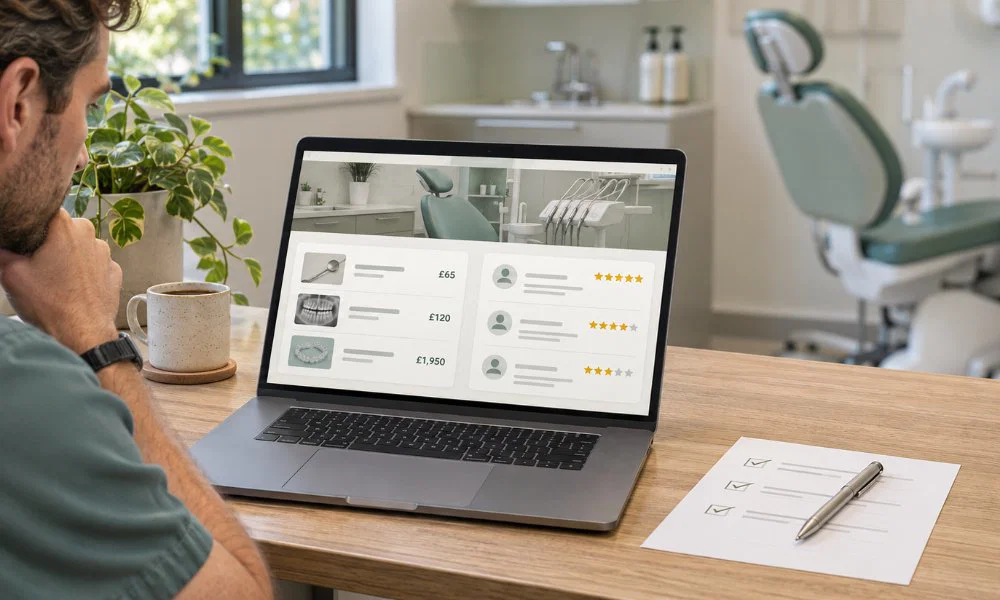
The page a patient lands on decides whether they enquire. In January they will be comparing you with two or three other practices in a single sitting, so thin pages lose quietly.
For each treatment you picked, check the page covers:
- What the treatment involves, in plain language
- What it costs, as an honest range, with what changes the price
- How long it takes, and how many visits
- Who it suits and who it does not
- What recovery or aftercare looks like
- Real photos of your own work, with proper consent
- An obvious way to book or ask a question
Prices are the big one. Most practices leave them off, and most patients will not enquire without them. An honest range filters out people who were never going to proceed and warms up the ones who will. Just make sure any price you publish includes everything a patient cannot avoid paying, which is now a legal requirement as well as good manners. We covered that in our guide to the pricing and review rules.
If a page needs real work, do it this month. Pages need time to be found and settle before they earn traffic, which is exactly the work our dental SEO service does month to month.
Decide Your Ads Plan Before Everyone Else Bids
January is competitive. Every practice with a budget shows up at once, and clicks get more expensive.
Two things help.
Start before the rush, not during it. A campaign that has been running since late autumn has data behind it. Google has learned which searches convert for you, and you have had time to cut the keywords that waste money. Starting cold on the 2nd of January means paying premium prices while you learn.
Decide your ceiling in advance. Know what you are willing to pay for an implant enquiry versus a whitening enquiry, so you can judge performance calmly instead of panicking at the spend. If you want a refresher on where ad money usually leaks, our guide to ad budget waste covers the common ones, and our Google Ads for dentists service exists for practices that would rather not watch it daily.
Fix the Enquiry Response Problem Before It Costs You
Here is the part nobody plans for, and the part that wastes the most money.
In January, enquiries arrive in bursts, and a lot of them arrive in the evening and over weekends. Someone decides at 9pm on a Sunday that this is the year, searches, and fills in three practices’ contact forms.
The practice that replies first usually gets them. Not the best practice. The fastest.
So before the rush:
- Agree who checks enquiries, and how often, including Mondays after a weekend
- Make sure the phone gets answered during your busiest weeks, even if that means temporary cover
- Have something in place to catch enquiries out of hours, so a 9pm visitor leaves their details rather than closing the tab
That last point is where an automated enquiry system pays for itself in a single month, and it is what our lead conversion services handle.
Also worth doing: write your standard replies now. A clear, warm response to “how much are implants?” takes ten minutes to write once and saves hours later, when everyone is busy. Our guide to why enquiries do not turn into patients covers what those replies should say and how to follow up.
Build Your Review Flow Up Through December
Patients comparing practices in January will read your recent reviews. If your last one is from the summer, you look dormant next to a competitor collecting two a week.
You cannot fix that in January. You can fix it now by asking every happy patient between now and the new year, at the moment they are happiest, with a link that takes one tap. No incentives, ever. Just asking properly, every day.
A steady trickle through November and December means that when the rush arrives, your profile looks alive and your Map Pack position is stronger. Our guide to gathering reviews consistently covers the system, and our online reputation management service runs it for practices who would rather not chase it.
Do Not Forget the Patients You Already Have
Everyone focuses on new patients in January. Meanwhile, two quieter opportunities sit in your own records.
Patients with unfinished treatment plans. Someone who had implants recommended in March and never went ahead is far easier to convert than a stranger. A personal call from the practice, not a mass message, is the right approach.
Patients who drifted away. A warm, no-pressure message in early January lands at exactly the moment people are sorting things out. Our guide to bringing back lapsed patients covers what to say.
Both cost almost nothing and both work best when the message goes out in the first fortnight of January, which means writing them in December.
A Simple Timeline
Now, through late November: choose your target treatments, rewrite those treatment pages, start or tidy up your ad campaigns, begin asking every patient for a review.
December: write your standard enquiry replies, agree who handles enquiries over the holidays and in January, prepare your reactivation messages, keep the reviews coming, and check your opening hours are correct everywhere online.
Early January: send the reactivation messages, respond fast, and resist changing everything in week one. The groundwork is already done.
February: look at what actually converted, and keep the pages and campaigns that worked rather than switching off until next year.
That last point matters. Practices that treat January as a one-off campaign start from scratch every year. Practices that treat it as the payoff from autumn work compound their advantage each time round.
If You Would Rather Not Juggle It
Most of this is straightforward. It is just a lot of small things, at the busiest time of year, on top of a full diary.
That is the work we take off practice owners’ hands. Our dental marketing services cover the search visibility, ads, reviews and enquiry capture as one connected system, on monthly plans with no long-term contract.
If you want to go into January properly prepared, book a free consultation and we will look at where your practice stands now and what is realistic in the weeks you have left.
FAQs
Ideally in October or November. Search visibility, reviews and ad performance all take weeks or months to build, so work started in January arrives too late to affect it. The practices that do well in January did the work the previous autumn.
Cosmetic and elective treatments in particular, including whitening, aligners, veneers and implants. New Year resolutions and the aftermath of holiday photographs push people towards treatments they have been putting off.
Publishing honest price ranges usually improves enquiry quality, because patients self-select before contacting you. Whatever price you show must include every charge a patient cannot avoid, so check your pages carefully before the busy period.
Being too slow to reply. Enquiries arrive in bursts, often in the evening and at weekends, and patients typically contact several practices at once. Whoever responds first usually wins the booking, regardless of who had the better website.