Two dental practices sit on the same high street. Both offer the same treatments, both have decent websites, both have been established for years. Yet when a patient searches “dentist near me”, one practice appears at the top of Google and fills its diary, while the other sits on page two and wonders where the phone calls went.
That difference is not luck, and it is not about who spent more on their website design. Google ranks dental practices using a set of signals it can measure, and once you understand what those signals are, SEO stops feeling like a black box and starts looking like a to-do list.
This guide explains how Google actually decides which dental practice ranks first. Not a checklist of tasks (we have written that separately), but the logic underneath: what Google is trying to work out about your practice, where it looks for evidence, and why some practices dominate local results while others never break through.
First, Understand What Google Is Trying to Do
Google has one job when someone searches for a dentist: recommend the practice that person is most likely to be happy with. Every ranking signal exists to answer one of three questions:
- Relevance: Does this practice offer what the searcher wants?
- Proximity: Is this practice conveniently located for them?
- Trust: Can Google be confident this practice is genuine, established and good?
SEO for dentists is simply the work of giving Google strong, verifiable answers to those three questions. Everything below fits into one of them.
Question 1: Relevance. Does Your Website Say What You Do?
Google cannot rank you for “dental implants” if your website barely mentions them. This sounds obvious, yet it is the single most common problem we find when auditing dental websites: a practice offers ten treatments but its website only properly describes three.
Here is how Google reads relevance:
Each treatment needs its own page. A single “Our Services” page listing everything in one paragraph gives Google almost nothing. A dedicated page for implants, another for Invisalign, another for emergency appointments tells Google exactly which searches you belong in. This is why practices with well-structured service pages consistently outrank practices with prettier but thinner websites.
Your pages need to answer real questions. Google watches how searchers behave. If people click your page and immediately return to the results, that tells Google your page did not satisfy them. Pages that cover costs, suitability, the procedure itself and aftercare keep visitors reading, and that engagement feeds back into rankings.
Structure matters as much as words. Page titles, headings, image alt text and schema markup are how Google parses what each page is about. Our on-page SEO checklist for dental websites covers this layer in detail if you want the full task list.
The practical takeaway: audit your website against your treatment list. Any treatment you want patients for that does not have a substantial, well-structured page is a ranking you have not entered the race for.
Question 2: Proximity and Local Signals. Are You Clearly a Local Business?
Dental searches are local searches. Google knows a patient in Croydon will not travel to Leeds for a check-up, so local signals carry enormous weight, arguably more than anything else for a dental practice.
Three things drive your local visibility:
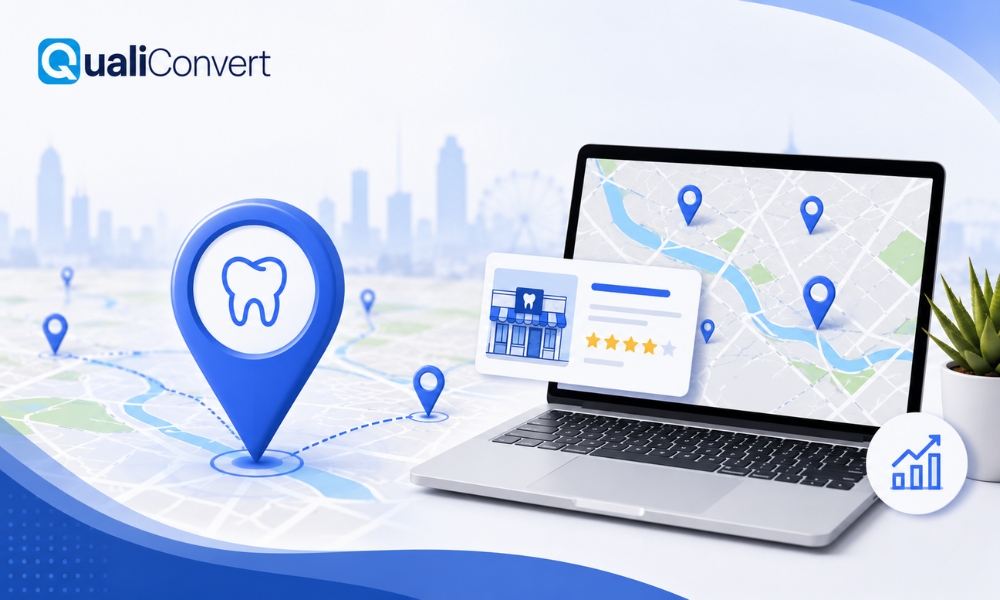
- Your Google Business Profile. For the Map Pack (the three practices shown on the map at the top of local results), your profile often matters more than your website. Categories, services, photos, posts, Q&A and opening hours all feed Google’s confidence in matching you to searches. If you want to improve your visibility in the areas surrounding your practice, our guide on how to get found around your practice explains how local search visibility can be expanded beyond your immediate location. This is the ground our local SEO for dentists service covers, and we broke down how to win those positions in our guide to the top three map results.
- Consistency everywhere. Google cross-references your practice name, address and phone number across your website, directories, and healthcare listings. Every mismatch (an old phone number on a directory, a slightly different practice name on Yell) chips away at Google’s confidence. Boring work, real impact.
- Location relevance on your website. Your site should make your location unmistakable: your town in page titles, an embedded map, localised content. If you serve several nearby areas, well-written location pages extend your reach into neighbouring towns where you have no physical address.
- Practices often lose here without realising it. They assume Google “just knows” where they are. Google knows your address; what it measures is how consistently and prominently the rest of the internet agrees with it.
Question 3: Trust. Why Would Google Risk Recommending You?
This is the layer that separates page one from page three, and it is where most dental SEO campaigns are won or lost. Google treats health-related searches with extra caution, holding medical and dental websites to a higher standard of credibility. Two signal groups carry most of the trust weight:
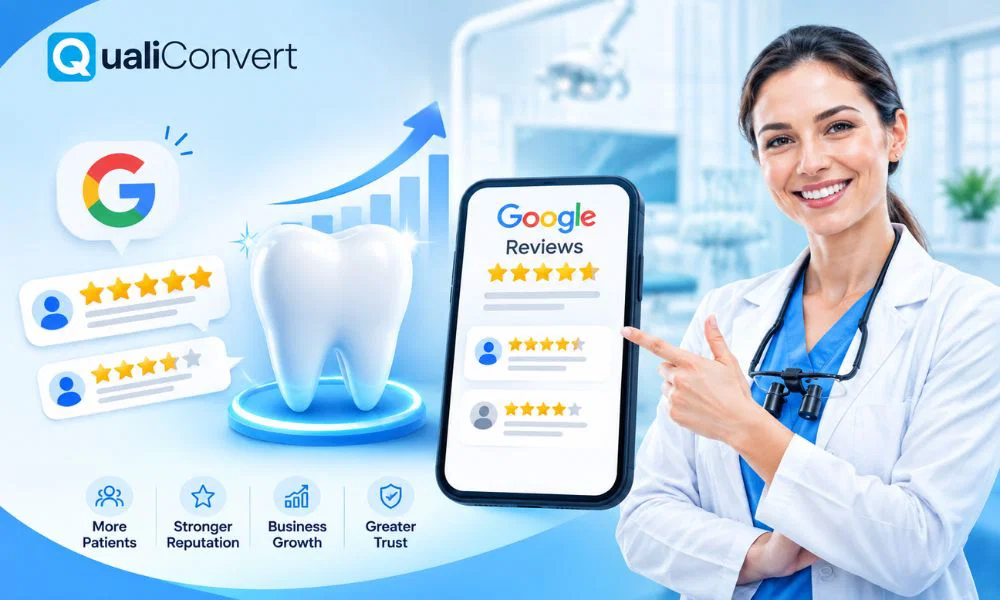
Reviews. Volume, rating, recency and content all count. A practice gathering fresh, detailed reviews every week sends a continuous signal that patients keep choosing it and keep being happy, which is why online reputation management sits alongside the SEO work rather than apart from it. A practice whose last review is eight months old sends the opposite signal, whatever its star rating says. Review content matters too: when reviews repeatedly mention specific treatments and experiences, Google connects your practice to those searches.
Links from other websites. When reputable websites link to yours, Google reads it as a vote of confidence. This is the hardest signal to build and the one that most often explains a stubborn ranking plateau. A practice can have excellent content and perfect local signals, yet stay stuck behind competitors whose websites have earned links from dental industry publications, local news and professional bodies. If your rankings improved for months and then flatlined, your link profile is the first place to look.
There is a quieter trust layer as well: a secure site, visible team pages with real clinicians and GDC registration details, clear contact information and honest content. Google’s guidelines explicitly reward health websites that demonstrate real expertise and real people behind the advice.
The Signals Behind the Signals: Site Experience
None of the above lands if your website frustrates visitors. Google measures page speed, mobile usability and stability directly, and it measures the consequences indirectly through visitor behaviour. Most dental searches now happen on phones, often in a spare five minutes, sometimes in pain. A site that loads slowly or hides the phone number behind a menu loses those visitors, and Google notices the pattern.
This is also where rankings turn into revenue. Ranking first means nothing if visitors do not book, which is why site experience work overlaps so heavily with conversion work. We covered that side in how to create a dental website that converts visitors into patients.
Putting It Together: Why the Same Practices Keep Winning
Look at any town’s dental search results and you will notice the same few practices dominating across dozens of searches. That is not because they found a trick. It is because these signals compound:
- Strong treatment pages earn rankings, which bring visitors, whose engagement strengthens the rankings further.
- More patients mean more reviews, which lift the Map Pack, which brings more patients.
- Growing visibility attracts mentions and links, which raise the trust that protects every other ranking.
The flywheel spins slowly at first, which is why SEO for dentists rewards patience and consistency over bursts of activity. It is also why the gap between the top practice and everyone else tends to widen over time. The best month to start was a year ago. The second best is now.
Where a Specialist Agency Fits In
Everything in this guide is knowable, but very little of it is quick, and almost none of it is one-off. Rankings respond to sustained, coordinated work across content, local signals, trust and technical health, which is difficult to do properly between patients.
That is the work our SEO for dentists service exists to carry: we handle the strategy, content, local optimisation and monitoring on a monthly subscription with no long-term contract, and you watch enquiries and rankings move through our DCP Dashboard. If you want to know where your practice currently stands on the three questions above, book a free consultation and we will show you, honestly and specifically.
FAQs
Most UK practices see meaningful movement in 4 to 6 months and strong, stable results within 9 to 12. Timeframes depend heavily on your local competition and your website’s starting point.
No single factor decides it, but for local visibility your Google Business Profile and reviews carry the most immediate weight, while content depth and links from other websites decide the harder, more valuable rankings.
Because the two use overlapping but different signals. Map Pack positions lean on your Business Profile, proximity and reviews, while organic results lean more on your website’s content and link authority. Strong practices need both.
Parts of it, yes. Completing your Google Business Profile, gathering reviews and fixing obvious content gaps are all achievable in-house. The layers that usually need specialists are technical SEO, content strategy at scale and link building, which is typically where DIY campaigns stall.